
Programs and Activities
Belonging Begins with Us: Building Deeper Relationships in CNC Programs
Tammy Nucci explores how educators can create trusting, inclusive relationships with children, families, and peers—regardless of language or background. Drawing on trauma-informed care, culturally sustaining practices, and early childhood best practices, participants will learn strategies to design routines and environments that promote safety, respect, and belonging. This session offers practical tools and reflective discussion to help build relationships rooted in empathy and inclusion.
Handouts:
Workshop Outline
Learner Journal
Fostering Diversity and Inclusion: Building Connections and Quality in the ECE Classroom
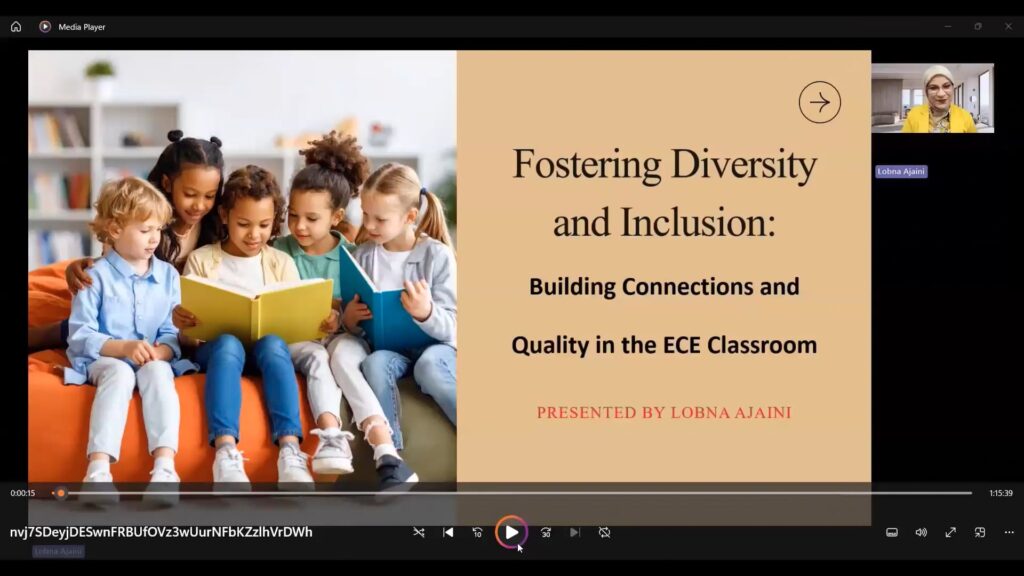
In this session, Lobna Ajaini of Childhood Empowerment empowers educators to create inclusive, high-quality learning environments that inspire care and nurture connections. With a focus on diversity, equity, and inclusion, participants will explore culturally responsive teaching practices, develop tools to build meaningful relationships with newcomer families, and learn strategies to foster belonging in diverse classrooms. This workshop equips educators to create spaces where every child and family feel valued and connected.
True “Belonging” Means Not Trying to Fit In
Led by Kerry Drake of KD Talks, this workshop looks at the shift from “fitting in” to truly belonging. Drawing on research from thought leaders like Brené Brown, participants will reflect on identity, authenticity, and courage, and learn how to create spaces where children and adults feel seen, valued, and free to be themselves.
Handout: Workbook
Once Upon a Time: Inspiring Care and Building Connections Through Storytelling in Early Childhood Education

This session with Lobna Ajaini of Childhood Empowerment explores how storytelling can enhance care, language, imagination, and emotional resilience in early childhood education. This online workshop equips educators with practical strategies to integrate storytelling into daily routines, support children from diverse and newcomer backgrounds, and foster inclusive, high-quality learning environments.
Handout: Workbook
Story Sacks

Story Sacks are an engaging way to enhance story-time, support preliteracy, stimulate language development, and encourage children to tell their own stories. Developed in 1995 by UK principal Neil Griffith, story sacks also strengthen connections between early learning programs, homes, and across age groups.
In this interactive session led by ECCDC’s Ginette Wilson, participants will explore links to other curriculum areas and learn how to create their own story sacks. Educators are encouraged to bring their favourite children’s story.
Handouts:
Session Highlight and Reflection Journal
Higher Order Thinking Prompts
Helping Children Thrive and Grow

Helping Children Thrive and Grow explores the emotional journey of parenting while settling into a new country. This workshop focuses on building parental resilience through nervous system and body-based practices that can be modeled and shared with children to support regulation, security, and connection. Participants will learn how attachment-based strategies, emotional awareness, and cultural strengths can help newcomer families move beyond coping to truly thrive.
Led by Georgianna Lee, Counsellor and Coach, this session supports professionals in helping parents recognize emotional needs, strengthen empathy, and deepen parent–child relationships during times of transition.
Handout: Helping Children Thrive and Grow
Supporting Children in Developing a Practice of Mindfulness

Mindfulness is the practice of paying attention to the present moment with kindness and acceptance. When introduced early, it helps children build habits that support calm, confidence, and resilience throughout life. Mindfulness can reduce anxiety, promote well-being, and give children practical tools to manage stress and approach challenges with self-awareness.
Ginette Wilson of ECCDC will share resources and hands-on experiences to highlight the benefits of mindfulness and support curriculum planning for children of all ages.✨
Handouts:
Introducing Yoga in Preschool
Mindfulness Exercises for Kids
Reflection Journal
Why Mindfulness Belongs in the Classroom
Designing for Redirection: Supporting Behaviour Guidance in Early Childhood Spaces
.

Kerry Drake of KD Talks explores how thoughtfully designed early childhood spaces can support positive behaviour, emotional regulation, and connection. Rather than managing challenges, this session focuses on creating environments that help children feel safe, capable, and understood. Participants will discover practical redirection strategies, learn how design choices can support big feelings and self-awareness, and gain tools to create calm, responsive spaces that encourage social-emotional development. This session is ideal for caregivers seeking respectful, strengths-based approaches to behaviour guidance.
Handout: Workbook
WEBINAR: The Power of Pretend Play
What if children’s pretend play is the key to building real-world power and regulation? Join author and play advocate Mike Huber for a transformative session that explores how imaginative play helps children practice executive function skills, navigate emotions, and develop a strong sense of agency. You’ll learn why even play that feels chaotic or uncomfortable to adults—like play fighting—can be essential for regulation and connection. Discover practical ways to support rich, empowering pretend play in your classroom every day.
6 Mood-Boosting Yoga Poses to Try With Kids
Kids aren’t immune to stress and anxiety. There are a number of yoga postures (asana) and breathing techniques (pranayama) that can benefit children’s mental health and well-being and are easy to do with kids of all ages.Here are six wonderful poses that can help reduce stress and enhance well-being for children.