
Parents and Families
Helping Your Child Get Ready to Learn
Since children do best when they grow up in a healthy environment where they feel safe, respected and loved—the way you care for them will have a great impact on how well they will learn. This resource is available in multiple languages for download.Helping Your Child Cope With Stress
Settling in Canada can be stressful. What’s more, if your family had a long journey to safety, it’s common to still feel fearful. However, this can lead your child to feeling fearful, too—and that can result in stress. In this tip sheet, you’ll learn how to recognize the signs of stress in your child. Once you know what to look for, you can work as a family to find ways to begin to feel safe again. This resource is available in multiple languages for download.Guiding Your Child’s Behaviour
When children are anxious, it often results in difficult behaviour. No matter how your child behaves, it’s important to be consistent, but also understanding, patient and loving. This resource is available in multiple languages for download.Getting Ready for Kindergarten
Use the checklist to create a healthy daily routine that can help your child get ready for school. This resource is available in multiple languages for download.Creating Routines for Your Child
Repeated tasks make a routine that can help your child to feel relaxed and secure. This resource is available in multiple languages for download.10 Tips for Stopping Aggression
The ten tips in this sheet can help you to respond calmly and consistently to aggressive behaviour. This resource is available in multiple languages for download.Children Learn Through Play
When children play, they’re learning with their bodies by touching, seeing, hearing, smelling, tasting and moving. Every day, there’s something new to discover. Play also helps them to build social skills, language skills and more! This resource is available in multiple languages for download.Responding to a child’s or parent’s traumatic memory
English: Responding to a child’s or parent’s traumatic memoryFrench: Comment intervenir quand des enfants ou des parents ont des souvenirs traumatisants
The Resilience Guide: Program Strategies for Responding to Trauma in Refugee Children
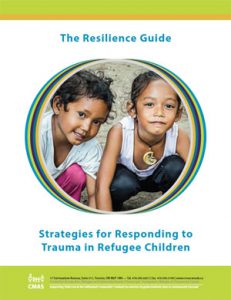 Many of the things we already do in early childhood programs not only support healthy child development, but also strengthen the capacity for resilience and recovery in young children who have experienced trauma. The Resilience Guide provides information and resources to help you understand the impact of the refugee experience at different ages, developmental effects of trauma and resettlement, and key strategies to strengthen families’ capacity for resilience. It also includes practical tip sheets designed to easily print out and share with your team!
Resource Parent Workshop: Facilitator Guide
This workshop introduces participants to the Cognitive Triangle and the impact of trauma on children’s thoughts, feelings and behaviours. It also introduces techniques for helping traumatized children understand and control their emotions and behavioural reactions.