
Culture and Diversity
Learn how to better engage diverse families in your program!
All parents want the best for their children, and there are plenty of creative ways to support parent involvement in early childhood programs. The McCormick Center has a collection of resources, training and ideas to help you engage diverse families in your program!Keeping home languages alive key to English success for newcomer kids
A language workshop for parents in northeast Calgary is highlighting the many benefits of keeping home languages alive and encouraging parents to pass on their spoken language to their kids.Checklist: Planning for a Multicultural Child Care Environment
Use this helpful checklist for planning a multicultural child care environment to see how your program is doing, and identify areas for improvements!Webinar – Young Children in Refugee Families and Early Childhood Programs: Ways to Mitigate the Effects of Trauma
Young children in refugee families often endure significant direct or indirect trauma from their experiences during conflict, flight, or resettlement. The issue of trauma has gained increasing visibility across the early childhood field, yet relatively little research has explored the specific traumatic experiences and needs of young refugee children or strategies to address them. High-quality early childhood programs can have enormous benefits, particularly for the children of immigrants and refugees. Join this webinar where experts will discuss the effects of trauma on the development of young refugee children, and practical strategies that child-care providers in Canada are using to support the resiliency of refugee children and families.Tutorial: 5 Guiding Principles for the Care of Newcomer Children
Working with young newcomers is challenging and important work. Not only can the children be vulnerable because of the stress they often experience while adapting to a new language and culture, but they can also be feeling the effects of the stress being experienced by their parents as the entire family adjusts to life in a new country! The guiding principles outlined in the 30-minute long 5 Guiding Principles for the Care of Newcomer Children tutorial provide a framework of program expectations and set the stage for flexible early childhood programs that are sensitive, responsive and inclusive.Migration Matters: Young Children of Newcomer Families
Drawing from Statistics Canada and research, this edition of Migration Matters summarizes recent trends on the socioeconomic status, education, and mental health of young children of immigrant families. It also provides resources of research and best practices to meet the needs of immigrant children and families.New Online Tutorial- Understanding Children’s Settlement: The Basics
International research shows that young immigrant and refugee children experience settlement needs in five key areas. To build responsive programs for newcomer children, CNC staff need to understand these unique needs and how they can help. Understanding Children’s Settlement: The Basics is a 15-minute tutorial that describes each settlement need and strategies you can use in your program. It will also give you tips on how you can tell if a child is settling successfully! At the end of the tutorial, you’ll also find suggested resources, a facilitator guide and added group discussion questions so that you can easily facilitate your own team training.Tips for building relationships with refugee children in your program
English: Tips for building relationships with refugee children in your programFrench: Conseils pour établir des liens avec les enfants réfugiés dans votre programme
The Resilience Guide: Program Strategies for Responding to Trauma in Refugee Children
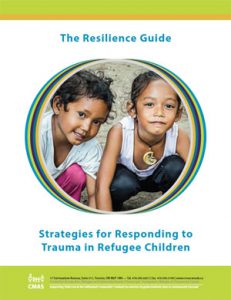 Many of the things we already do in early childhood programs not only support healthy child development, but also strengthen the capacity for resilience and recovery in young children who have experienced trauma. The Resilience Guide provides information and resources to help you understand the impact of the refugee experience at different ages, developmental effects of trauma and resettlement, and key strategies to strengthen families’ capacity for resilience. It also includes practical tip sheets designed to easily print out and share with your team!